Nobody Owned This Town for 16 Years — So the Residents Just Made Up Their Own Rules
A Line on a Map That Wasn't There
Somewhere in the paperwork shuffle of post-Civil War Missouri, a boundary line went missing. Not dramatically — no flood, no fire, no act of God. Just a clerk somewhere, probably exhausted, probably underpaid, drawing a county line that stopped a little too soon. The result was a pocket of land — a small farming community in the state's interior — that, technically speaking, belonged to nobody.
Neither the county to its east nor the county to its west could produce documentation showing the town fell within their jurisdiction. And in the 1870s, when land ownership was everything and paperwork was the only proof that mattered, that was a genuinely strange situation to be in.
The state capital didn't notice. The county seats didn't notice. And for a while, neither did the residents.
Realizing You're Ungoverned
The community — a few hundred people, mostly farmers and their families, clustered around a grain exchange and a Methodist church — didn't discover the oversight through any dramatic revelation. It came out slowly, the way these things usually do: someone tried to register a land deed, hit a wall, asked around, and eventually got a shrug from two different county courthouses.
Once the situation became clear, the residents faced a choice. They could demand the state fix it immediately. Or they could sit with the strange freedom they'd accidentally been handed.
They chose the second option.
What followed wasn't lawlessness — these were churchgoing, corn-growing Midwesterners, not frontier outlaws. Instead, the community quietly built a parallel system of governance from the ground up. Disputes over property lines got settled in informal arbitration sessions held in the back room of the grain exchange. Road maintenance was handled through rotating volunteer labor, organized at Sunday church gatherings. Local fines for nuisance behavior — letting livestock wander, blocking the creek — were collected in a communal fund that paid for shared tools and repairs.
Nobody voted on any of this. Nobody had to. It just evolved, organically, the way small communities have always managed themselves when the formal structures fail to show up.
Handshake Laws and Borrowed Authority
The remarkable thing isn't that they governed themselves — it's how well they did it. For sixteen years, the community functioned without a sheriff with legal jurisdiction, without a formally recognized magistrate, and without any official mechanism for enforcing the agreements they'd made. And yet the agreements held.
Historians who've studied informal governance in 19th-century rural America aren't entirely surprised. In an era before reliable communication infrastructure, many small communities operated with significant autonomy simply because the nearest county seat was a full day's ride away. What made this Missouri situation unusual was that the autonomy wasn't practical — it was technical. The state could have reached them. It just didn't know it needed to.
The community's self-imposed rules were mostly common sense dressed up in local authority. If two neighbors couldn't settle a dispute between themselves, three elders would hear both sides and deliver a verdict. Nobody was compelled to accept the verdict, but social pressure in a community of a few hundred people is its own kind of enforcement mechanism. Refusing to honor an elder's ruling meant eating alone at the church potluck for a while. That was usually enough.
Jefferson City Finally Looks Down
The oversight unraveled the way most bureaucratic oversights do: someone filed the wrong form, which led to an audit, which led to a map review, which led to a very confused state official staring at a gap in the county boundary records and wondering how it had survived for sixteen years.
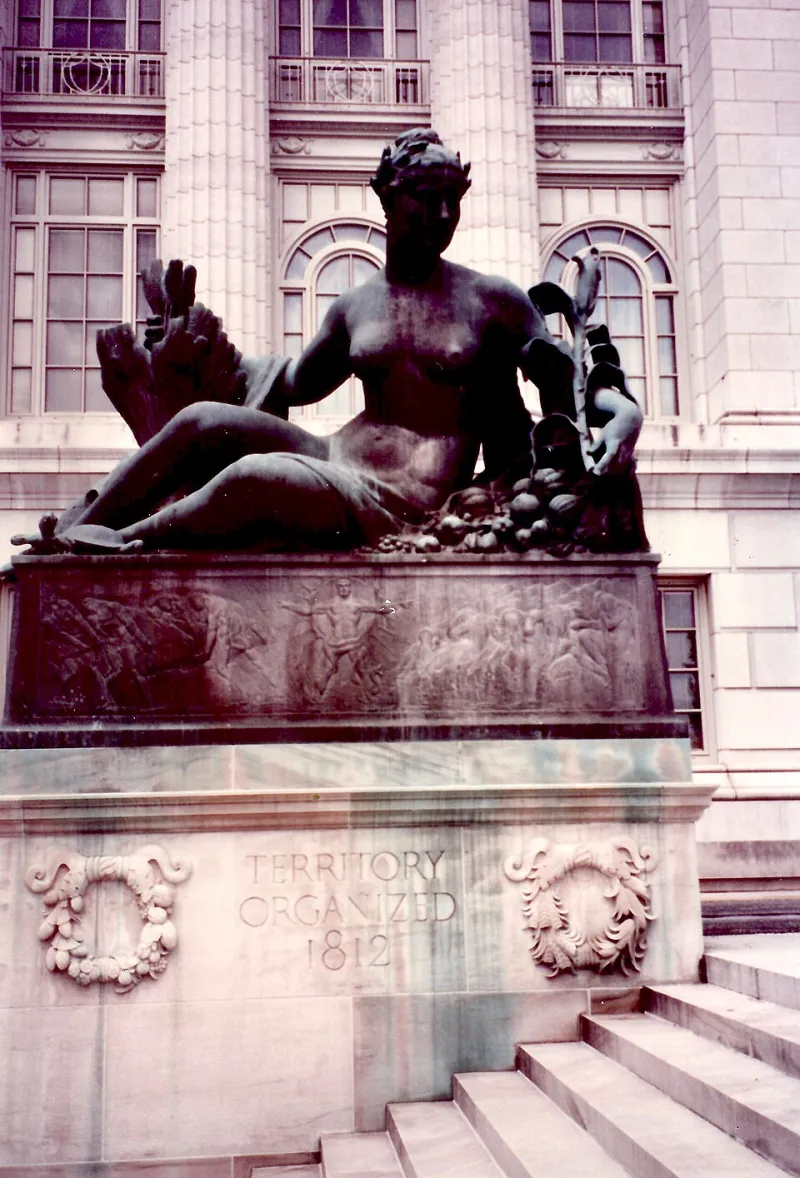
 Photo: Jefferson City, via www.attractionsofamerica.com
The scramble to reclaim the town was, by all accounts, more chaotic than the town's self-governance had ever been. Both adjacent counties immediately asserted jurisdiction, producing competing historical arguments for why the land was rightfully theirs. The state legislature had to convene a special committee to adjudicate the boundary — a process that took nearly two years and generated more paperwork than the community had produced in the entire preceding decade.
The residents, for their part, were largely cooperative. They'd never been trying to secede from anything. They just hadn't been given a choice. When the boundary was finally redrawn and the town was formally absorbed into the county to its east, most people accepted it with the same quiet pragmatism they'd applied to everything else. They registered their deeds, acknowledged the new sheriff's jurisdiction, and went back to farming.
A few of the older residents reportedly grumbled that the new arrangement was more complicated than what they'd had before. They weren't entirely wrong.
What This Says About How America Actually Works
The story of Missouri's accidental republic isn't really about rebellion or frontier independence. It's about something more mundane and more interesting: the enormous amount of American civic life that runs on documentation nobody actually checks.
County boundaries, municipal incorporations, tax jurisdictions, zoning designations — these aren't verified continuously. They're established, filed, and then assumed to be correct unless something forces a review. The 1870s version of that system was obviously more fragile than today's. But the underlying principle hasn't changed as much as we'd like to think.
Every few years, some local government somewhere discovers that a neighborhood has been paying taxes to the wrong municipality for decades, or that a stretch of road has technically been unincorporated since a boundary survey in 1923. The paperwork said one thing. Reality quietly did something else. And nobody checked.
This Missouri community just happened to do something genuinely useful with the gap — and managed to govern themselves so competently that it took sixteen years for anyone outside to notice there was a problem at all.
That's either a damning indictment of state oversight, or a pretty remarkable compliment to a few hundred farmers who figured it out on their own. Possibly both.