Missouri Voters Chose a Dead Man for Senate — and the Law Said That Was Fine
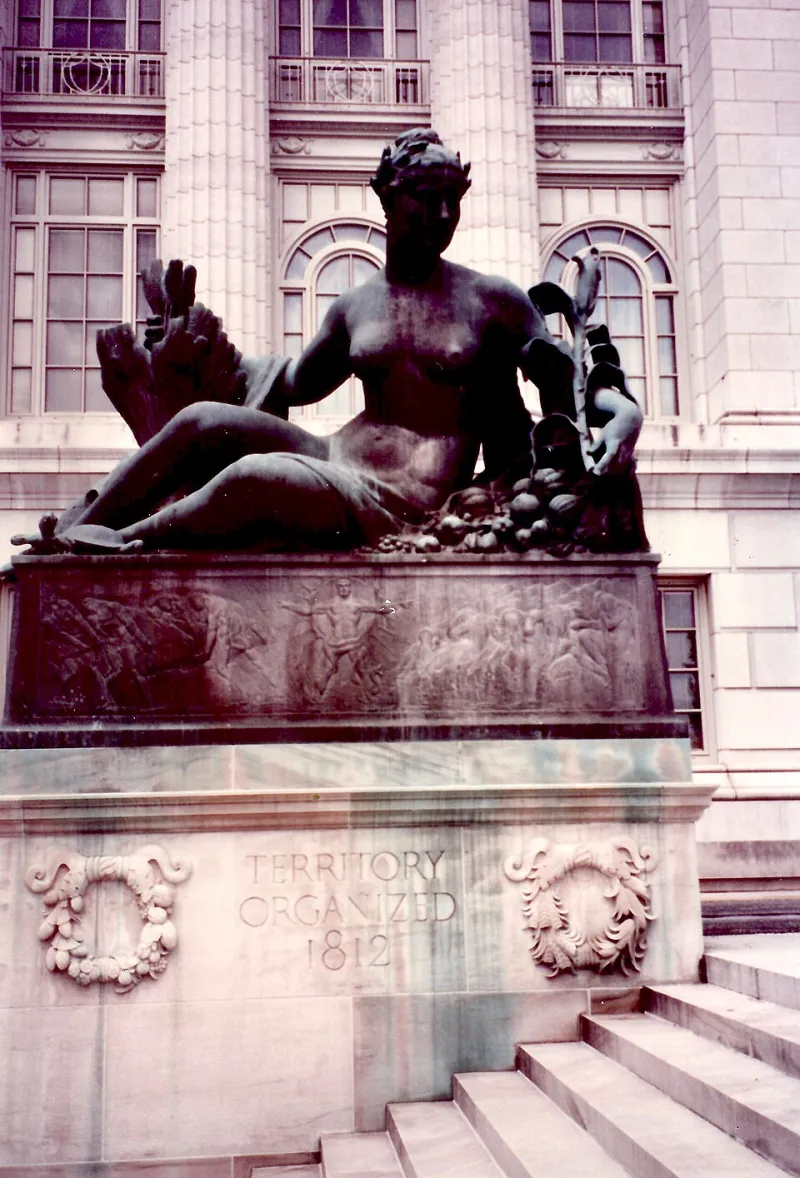
Photo: Infrogmation, CC BY-SA 4.0, via Wikimedia Commons
Election night in America is usually a story about winners and losers, about concession calls and victory speeches, about the transfer of democratic power from one living human being to another. November 7, 2000, was a lot of things — chaotic, historic, deeply confusing — but in Missouri, it was something else entirely.
It was the night a dead man beat a sitting attorney general for a seat in the United States Senate.
And here's the part that makes it even stranger: the result was completely, unambiguously legal.
The Crash That Changed Everything
Mel Carnahan had been Governor of Missouri since 1993. By 2000, he was running for Senate against Republican incumbent John Ashcroft — the same John Ashcroft who would go on to become U.S. Attorney General under President George W. Bush. It was a tight, contentious race in a state that both parties genuinely needed.
 Photo: John Ashcroft, via cdn.britannica.com
 Photo: Mel Carnahan, via fox2now.com
On October 16, 2000 — just three weeks before Election Day — Carnahan, his son Roger, and an advisor died when their small plane went down in bad weather near Jefferson City. The crash was sudden, devastating, and politically unprecedented.
Under Missouri law, there was no mechanism to remove a candidate from the ballot once it had been printed and distributed. Absentee voting had already begun. Early ballots were already in transit. Carnahan's name would appear before every Missouri voter on November 7th, regardless of the fact that he was no longer alive to serve.
The question hanging over the state for the next three weeks was simple and genuinely unanswerable: what happens if he wins?
The Governor Made a Promise
Lieutenant Governor Roger Wilson, who became acting governor after Carnahan's death, stepped into the void with a decision that was either politically savvy, genuinely honorable, or both. He announced publicly that if Carnahan received more votes than Ashcroft, he would appoint Jean Carnahan — Mel's widow — to fill the Senate seat.
 Photo: Jean Carnahan, via www.capitalgazette.com
This was not a small thing. Wilson was essentially telling Missouri voters that a vote for a dead man was, in effect, a vote for his widow. He was trying to give the ballot a living face, to make the abstract concrete. Whether voters would find that comforting or deeply weird was an open question.
Ashcroft, to his credit, chose not to run attack ads against his deceased opponent in the final weeks of the campaign. He later said it was a matter of basic decency. Whatever his motivations, the restraint was noted.
Election Night: The Dead Man Wins
When the results came in, Mel Carnahan had defeated John Ashcroft by roughly 49,000 votes — about 50.5% to 48.4%. Missouri had elected a man who had been dead for twenty-two days.
The national press, already overwhelmed by the Florida recount drama unfolding simultaneously, found a moment to register appropriate disbelief. This was not a scenario covered in any civics textbook. There was no chapter titled "What To Do When the Winner Is Dead."
Ashcroft conceded the following day. He later wrote that it was one of the more surreal moments of his political life, which is saying something given what came next for him.
The Constitutional Gymnastics Begin
Here's where it gets genuinely complicated. The U.S. Constitution specifies that senators must be at least thirty years old, residents of the state they represent, and — this is the part that matters — alive. A dead person cannot be sworn in, cannot cast votes, cannot serve.
So the seat, technically, couldn't be filled by Mel Carnahan. But the election results were valid. The voters had spoken. The state had a process.
Governor Wilson followed through on his promise and appointed Jean Carnahan to the Senate on January 3, 2001. She was sworn in as a Missouri senator — not because she had won an election, but because her late husband had, and because a sitting governor had made a public commitment to honor that outcome by proxy.
Jean Carnahan served in the Senate until 2002, when she ran in a special election to complete the term and lost to Republican Jim Talent. She had never run for anything before her husband's death. She became a senator anyway.
What the Law Revealed About Itself
The Carnahan election exposed something interesting about American democracy: it is remarkably resilient to bizarre circumstances, but only because it improvises.
There was no law that said "if a candidate dies after ballots are printed, here is exactly what happens." There was a patchwork of state statutes, constitutional provisions, and gubernatorial discretion that, when stitched together, produced a functional outcome. It wasn't elegant. It wasn't planned. But it worked.
Several states updated their ballot laws in the years following 2000 to create clearer procedures for candidate deaths close to Election Day. Missouri itself revised some of its deadlines. The Carnahan situation had been a stress test, and the system had passed — but only barely, and only because the humans involved chose to behave reasonably.
The Part That Still Feels Impossible
Step back for a moment and consider the full picture: a man died. His name appeared on a ballot. Voters chose him anyway — knowingly, deliberately, in large enough numbers to win. A governor honored that result by appointing the dead man's widow. She served in the United States Senate.
Every single step of that sequence was legal. Every single step of it sounds like something a screenwriter would pitch and get told was too far-fetched.
Mel Carnahan never gave a victory speech. He never got sworn in. He never cast a Senate vote. But he won an election, and that win echoed forward into the real world in ways that shaped careers, shifted Senate dynamics, and left a quiet mark on American political history.
Sometimes the strangest outcomes are the ones that follow every rule exactly.