How a City Accidentally Owned Its Own Streets — And Then Had to Rename Three of Them to Get Out of the Mess
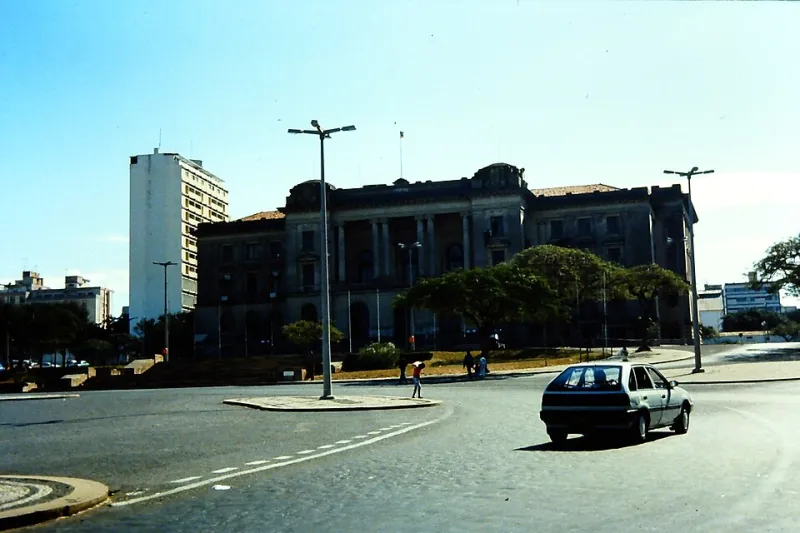
Photo: krugergirl26 from Boston, MA, CC BY 2.0, via Wikimedia Commons
There's a particular flavor of bureaucratic disaster that only the 1990s could have produced. The internet was new, digitization was the buzzword of every city hall meeting, and government offices across America were racing to convert their paper records into something a computer could understand. Most of that effort produced nothing more dramatic than a lot of late nights and bad coffee. But in one mid-sized American city, a mapping project that was supposed to modernize municipal records instead created a copyright dispute so tangled that the city eventually had no choice but to rename three of its own streets just to untangle itself.
Sit with that for a second. A city. Renaming its own streets. Because of a copyright it accidentally filed on itself.
The Best Intentions in the World
The project started simply enough. It was the early 1990s, and the city's planning department had decided to create a comprehensive digital map of its street grid — every road name, every intersection coordinate, every postal routing zone, all compiled into a single proprietary database. The goal was efficiency. Emergency services could use it. City planners could use it. Eventually, maybe, the public could use it.
The librarian overseeing the project — a meticulous, well-meaning civil servant who had spent years managing the city's geographic records — did exactly what you're supposed to do when you create a valuable database: she registered it. Under the intellectual property guidelines of the time, a database of original compiled information could qualify for copyright protection. The street names themselves weren't copyrightable, of course. But the specific arrangement, the coordinate data, the routing logic layered on top — that compilation, the argument went, was original creative work.
The Copyright Office accepted the registration. Nobody thought much about it. The database went to work.
Enter the Post Office
A few years later, the U.S. Postal Service began a nationwide push to update its automated routing software. The system needed accurate, standardized street-level data for every delivery zone in the country, and the most logical thing to do was to pull from existing municipal databases. Why reinvent the wheel when cities had already done the legwork?
 Photo: U.S. Postal Service, via logodix.com
So the Postal Service's contractors began incorporating local mapping data into their systems — including, as it turned out, the street database from this particular city. They didn't ask. They didn't license it. In their view, they were working with public infrastructure data. Streets are public. Street names are public. What was there to license?
The city's legal department, apparently having rediscovered the copyright filing while reviewing something unrelated, saw things differently. Their database had been used without permission. Technically, the U.S. Postal Service had infringed on a copyright held by a city government — a copyright over the names of that city's own streets.
The Standoff Nobody Knew How to Resolve
What happened next was less a legal battle than a prolonged institutional staring contest. The Postal Service's position was essentially: this is absurd, street names are public information, and we're not paying licensing fees to a city for the right to deliver its mail. The city's position was technically coherent but practically uncomfortable — yes, we own this database, but we also very much need our mail delivered.
The underlying legal question was genuinely murky. Courts had wrestled for years with the line between raw factual data (not copyrightable) and original compiled databases (potentially copyrightable). The 1991 Supreme Court decision in Feist Publications v. Rural Telephone Service had already established that mere facts can't be owned, but the city's lawyers argued their database was more than a list of facts — it was a structured, layered geographic work.
 Photo: Feist Publications Supreme Court case, via legal-wires.com
The Postal Service's lawyers argued the opposite. And both sides had a point.
Three Streets That Had to Go
The resolution, when it finally came, was less a legal victory than a creative workaround. The city and the Postal Service reached an informal agreement, but it came with a catch: three specific street names in the database had been entered with unique formatting variations — abbreviations, punctuation choices, coordinate tags — that were distinctive enough that they arguably represented the kind of original expression that copyright protects. Those three entries were the sticking point.
Rather than fight over them in court or negotiate a licensing fee that would set a precedent neither side wanted, the city made a quiet decision. It renamed the three streets. New names, new entries, clean slate. The old copyright claim became moot because the data it protected no longer corresponded to anything that existed.
Residents of those streets received form letters explaining that the renaming was for "administrative consistency purposes." Which was, technically, true.
The Lesson Nobody Really Learned
The story didn't make national headlines. It was too strange, too procedural, too difficult to explain in a single sentence. But it sits in the archive of American bureaucratic history as a perfect illustration of what happens when the tools of intellectual property law get applied to the physical world without thinking through the implications.
Public infrastructure is supposed to belong to the public. But in the 1990s, as governments scrambled to digitize everything they owned, the act of organizing public information sometimes created new private rights — rights that nobody intended, nobody wanted, and that turned out to be almost impossible to undo.
Almost. You can always just rename the streets.