The Government Sold the Same Land 30 Times Over — and Every Deed Was Real
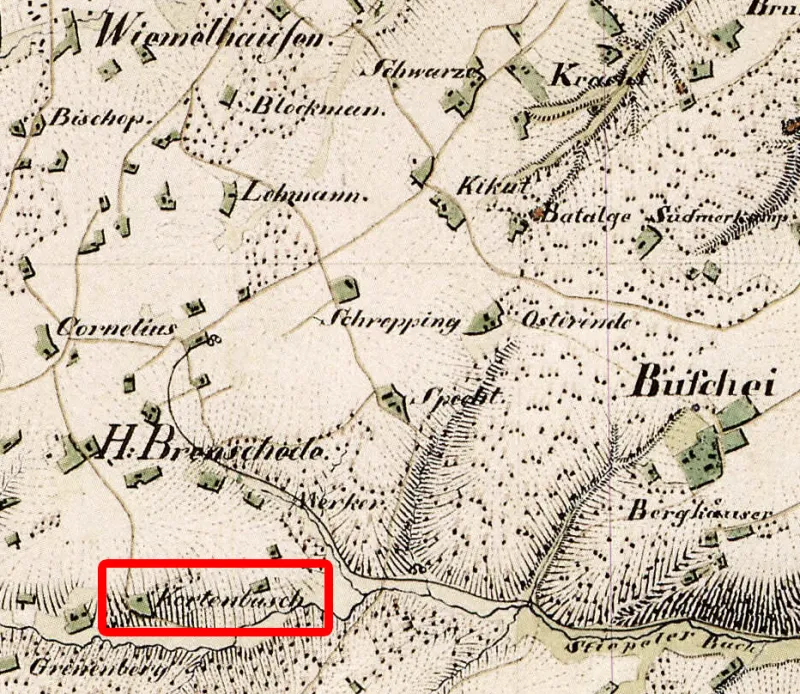
Photo: Maps by Royal Prussian Land Survey, Public domain, via Wikimedia Commons
Imagine buying a house, getting the deed, moving in your furniture, planting a garden — and then one morning, twenty-nine other families show up at your door, each holding paperwork that says the house is theirs. And each piece of paperwork is genuine.
This is not a hypothetical. This is what happened to settlers across the American Midwest in the decades following the Louisiana Purchase. The United States government, in one of the most ambitious and chaotic land administration projects in its history, managed to sell the same plots of land to multiple buyers simultaneously — and every single transaction was technically legal.
 Photo: Louisiana Purchase, via images.squarespace-cdn.com
The courts were not thrilled.
The Purchase That Created the Problem
In 1803, the United States bought approximately 828,000 square miles of territory from France for $15 million. This was, by any measure, a spectacular deal. It was also an administrative catastrophe waiting to happen.
The land in question — stretching from the Gulf of Mexico to the Canadian border, from the Mississippi River to the Rocky Mountains — was not empty. It had been occupied, farmed, traded, and claimed for generations by Native nations, French settlers, Spanish colonists, and various combinations of all three. When France sold it to the United States, it sold the political sovereignty. What it did not sell was a clean set of records.
The Spanish colonial administration had issued land grants across large portions of the territory. The French had issued their own. Some plots had been granted twice by different colonial powers. Some grants overlapped. Some had never been properly surveyed. Some existed only as handwritten documents in languages American officials couldn't read.
Into this chaos stepped the U.S. General Land Office.
 Photo: General Land Office, via s.hdnux.com
A System Built on Assumptions That Weren't True
The General Land Office, established in 1812, was tasked with surveying, recording, and selling federal land across the expanding nation. It was an enormous job, staffed by a relatively small number of officials working with limited technology, incomplete records, and an almost total absence of on-the-ground knowledge about the territory they were administering.
The system they used — the Public Land Survey System — was genuinely elegant in theory. Land was divided into townships, ranges, and sections, each with a precise numerical designation. A deed would specify a section number, a township, a range, and the purchaser would know exactly what they owned.
The problem was that this system was being applied to land that had already been claimed under entirely different frameworks. Spanish and French grants didn't use township grids. They used natural landmarks — a creek bend, a stand of oak trees, a distance from a river — descriptions that were vague, unmeasurable, and impossible to reconcile with a geometric survey.
When GLO officials attempted to map existing claims onto their grid system, errors compounded. A French grant described as "forty arpents along the Missouri River" might overlap with three different numbered sections depending on how you measured the river's course. A Spanish grant with imprecise boundaries might swallow half a township. And then, on top of all of that, the GLO would sell the same numbered sections to new American settlers who had no idea any of this was going on.
 Photo: Missouri River, via extension.sdstate.edu
Thirty Deeds, One Field
The most extreme cases — and there were many — involved single plots of agricultural land to which a half-dozen or more parties held valid, independently issued documentation. In some recorded instances across Missouri, Illinois, and the territories that would become Arkansas and Louisiana, the count climbed considerably higher.
The thirty-deed scenario wasn't a single famous incident with a name and a courthouse. It was a pattern, repeated across thousands of individual properties, that emerged slowly as settlers arrived, fences went up, and neighbors discovered that their neighbor's deed described the same forty acres as their own.
Lawsuits followed. Enormous numbers of lawsuits.
The Courts Had to Invent a Hierarchy of Legitimacy
The legal question the courts faced was genuinely novel: when multiple parties hold equally valid deeds to the same property, who wins?
American property law had a concept called "prior appropriation" — first come, first served, more or less — but it broke down when the competing claims came from entirely different legal systems operating in different centuries. A French colonial grant from 1750 and a U.S. government deed from 1820 were both "valid" in some sense, but they derived their validity from different sovereigns, different legal traditions, and different notions of what land ownership even meant.
The Supreme Court weighed in repeatedly. In cases like Soulard v. United States (1830) and a string of related decisions throughout the mid-19th century, the Court tried to establish rules for which types of claims took precedence. Generally, pre-existing Spanish and French grants were to be honored if they could be proven — but proving them required documentation that was often incomplete, lost, or written in ways American courts couldn't evaluate.
In practice, outcomes were inconsistent. Some original grantees won. Some lost to later American purchasers. Some cases settled with partial compensation. And some — remarkably — dragged on so long that the original parties were long dead before any resolution was reached, leaving their descendants to continue litigating land their great-grandparents had never been able to use.
The Claims That Wouldn't Die
Perhaps the most unsettling aspect of the Louisiana Purchase land mess is how long it persisted. Title researchers working in Missouri and Arkansas in the early 20th century — a hundred years after the Purchase — were still uncovering chains of title clouded by unresolved colonial grants. Some parcels of land carried legal uncertainty that made them effectively unsellable because no title insurance company would touch them.
The federal government eventually created special boards and commissions to adjudicate the remaining claims, but the process was slow, underfunded, and never fully complete. Quiet title actions — lawsuits specifically designed to resolve competing ownership claims — were filed on Louisiana Purchase territory well into the 1950s.
The land was real. The deeds were real. The problem was that reality and paperwork had been operating on entirely different tracks for over a century, and closing the gap required decades of legal work that most Americans never knew was happening.
What It Tells Us About How the Country Was Built
The duplicate-deed disaster of the Louisiana Purchase era is easy to treat as a bureaucratic comedy — and in some ways it is. The image of a government selling the same field thirty times is genuinely, absurdly funny.
But underneath the comedy is a story about what happens when a nation expands faster than its systems can keep up. The United States in 1803 had just doubled in size overnight. It didn't have the surveyors, the record-keepers, the translators, or the legal frameworks to handle what it had just acquired. It improvised, as it often did, and the improvisation left marks that took generations to erase.
Somewhere in Missouri, there may still be a cornfield with a complicated past. Thirty families once had the paperwork to prove it was theirs. The corn doesn't know or care. But the lawyers — for a very long time — certainly did.