The Word 'Hollow' Almost Destroyed Tennessee Whiskey — And One County Clerk's Checkbox Started the Whole Thing
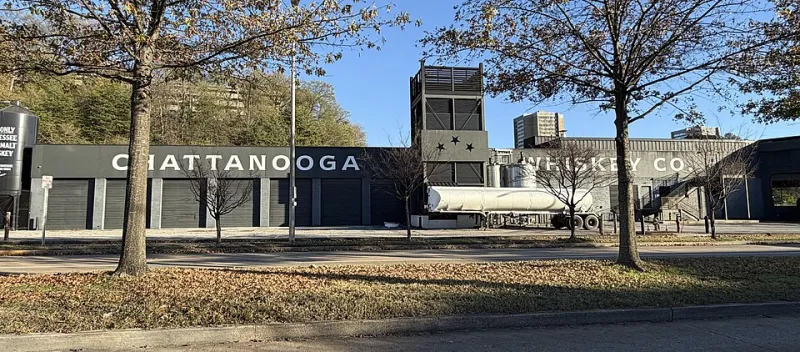
Photo: Dclemens1971, CC BY 4.0, via Wikimedia Commons
If you have ever poured a glass of Jack Daniel's, George Dickel, or any of the other spirits that carry the legally protected label of Tennessee Whiskey, you are drinking something that exists in its current form partly because a group of state legislators once spent several days arguing about the definition of a geographic feature that most of them had only seen on a topographic map.
 Photo: George Dickel, via www.voici.fr
 Photo: Jack Daniel's, via www.licorea.com
The word was hollow. And for a brief, chaotic period, it was the linchpin of a bureaucratic crisis that put the entire Tennessee Whiskey industry — a business worth hundreds of millions of dollars annually and deeply tied to the state's cultural identity — into genuine legal jeopardy.
All of it traced back to a single checkbox on a zoning form that a county clerk had filled out on an otherwise unremarkable Tuesday.
What Tennessee Whiskey Actually Is
Before getting into the chaos, it helps to understand what's at stake. Tennessee Whiskey is not just a marketing term. It is a federally recognized designation with specific legal requirements, maintained and enforced by the Alcohol and Tobacco Tax and Trade Bureau — the TTB — and reinforced by state law. To carry the label, a whiskey must be made in Tennessee, from a grain mixture of at least 51 percent corn, filtered through maple charcoal before aging (the famous Lincoln County Process), and aged in new charred oak barrels.
It is, in other words, a category with teeth. Producers can't just slap the name on anything. The designation protects both the producers and the consumers, and it took decades of regulatory work to establish.
Which is why what happened in that small Tennessee county was so alarming to so many people in so many expensive suits.
The Checkbox
The story begins with a distillery — one of the smaller craft operations that had emerged during the Tennessee whiskey boom of the 2000s and 2010s — applying for a commercial zoning classification for an expansion of its production facility. The application was routine. The county clerk's office processed dozens of similar forms every year.
But this particular form had a section that asked applicants to classify their land use according to a state-issued taxonomy of commercial and industrial categories. The taxonomy was old. It had been written before craft distilling was a meaningful economic category in Tennessee, and it hadn't been substantially updated since. The closest available classification for a distillery, the clerk determined, was something in the neighborhood of "small-scale agricultural processing" — a category that came with its own set of zoning restrictions, setback requirements, and, crucially, geographic eligibility criteria.
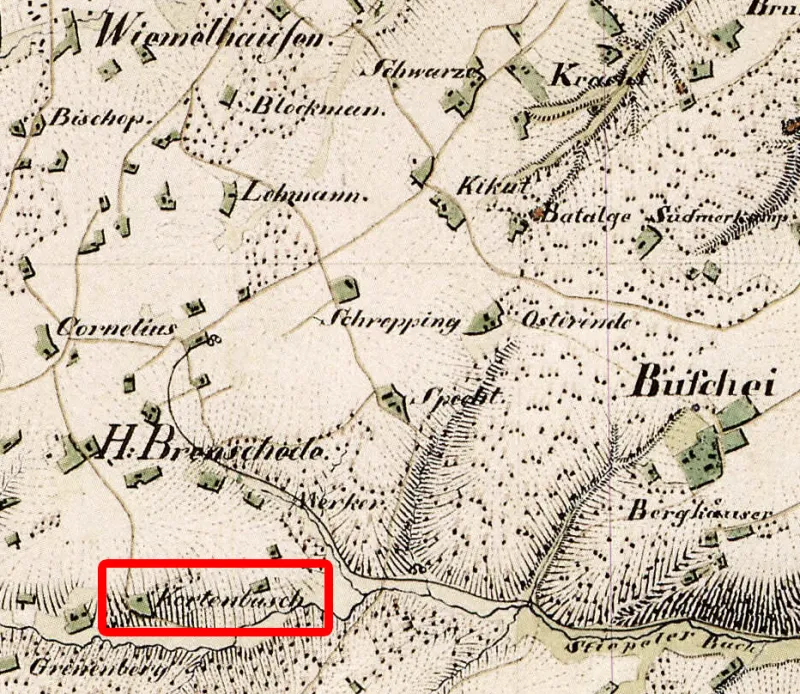
One of those criteria specified that agricultural processing operations of this type had to be located within or adjacent to a designated agricultural zone. The form asked the applicant to confirm this. The clerk, working from a county map that used older geographic terminology, checked the box indicating that the property sat within a qualifying area described, on that map, as a "hollow" — a low-lying area between ridges, a common geographic feature in the Tennessee hills and a term with a long history in Appalachian land use records.
The checkbox was checked. The application moved forward. Nobody thought about it again for almost two years.
When the TTB Came Knocking
The trouble started during a routine federal compliance review. The TTB periodically audits distilleries to confirm that their operations meet the requirements for their designated spirit categories. During the review of this particular distillery, a federal inspector cross-referenced the state zoning classification against the federal geographic eligibility standards for Tennessee Whiskey production.
And there was the problem. The federal standards used a different definition of the relevant geographic terms than the county map did. Under the TTB's framework, a "hollow" had a specific technical meaning tied to watershed boundaries and elevation data. Under the county's older map, the term was used more loosely, describing a general landscape feature that didn't necessarily correspond to the federal definition.
The distillery's zoning classification, in other words, was based on a geographic designation that the federal government did not recognize as valid for the purposes of Tennessee Whiskey production. Which meant the distillery's Tennessee Whiskey designation was, technically, unsupported by its current regulatory paperwork.
That, by itself, might have been a contained problem. But the TTB's review triggered a broader audit of how Tennessee counties were classifying distillery operations, and it turned out that the geographic terminology mismatch was not unique to this one county. Several other counties were using the same old maps with the same loose terminology. Multiple distilleries, including some very large ones, had zoning paperwork that contained the same ambiguity.
The Tennessee Whiskey designation — for all of them — was suddenly sitting on uncertain legal ground.
The Lobbyists Arrive
What followed was a collision of federal regulators, state legislators, county officials, distillery lawyers, and bourbon industry lobbyists that lasted the better part of a legislative session. The Tennessee Distillers Guild, which represents the state's whiskey producers, mobilized quickly. The economic stakes were not abstract: Tennessee Whiskey is a major export product, a tourism driver, and a point of genuine state pride. Losing the designation, or having it successfully challenged in court, would have been a catastrophe.
The resolution required action on multiple fronts simultaneously. The TTB agreed to a temporary forbearance while the state addressed the underlying issue. The Tennessee legislature passed a clarifying amendment to the state's distillery zoning statutes, explicitly defining the geographic terms used in land-use classifications for distillery operations and aligning them with federal standards.
And at the county level, the specific forms that had caused the problem were revised. The word "hollow," in its old informal sense, was removed from the relevant classification criteria. A new, technically precise definition replaced it — one that matched the federal framework exactly.
The distilleries kept their designations. The whiskey kept flowing.
A Very Tennessee Problem
There is something almost poetic about the fact that Tennessee Whiskey — a product defined by its attachment to a specific place, a specific landscape, a specific way of doing things — nearly came undone because of a disagreement about what that landscape was actually called.
The word "hollow" is as Tennessee as the whiskey itself. It's in the old songs, the old maps, the old ways of describing the land between the ridges where the creeks run and the distilleries sit. That it almost brought the whole legal edifice of the Tennessee Whiskey designation crashing down is exactly the kind of thing that makes you shake your head and reach for a glass.
Yes. That actually happened.