For Six Hours, a Janitor Was Worth More Than Most Fortune 500 Companies — Then the Phone Rang
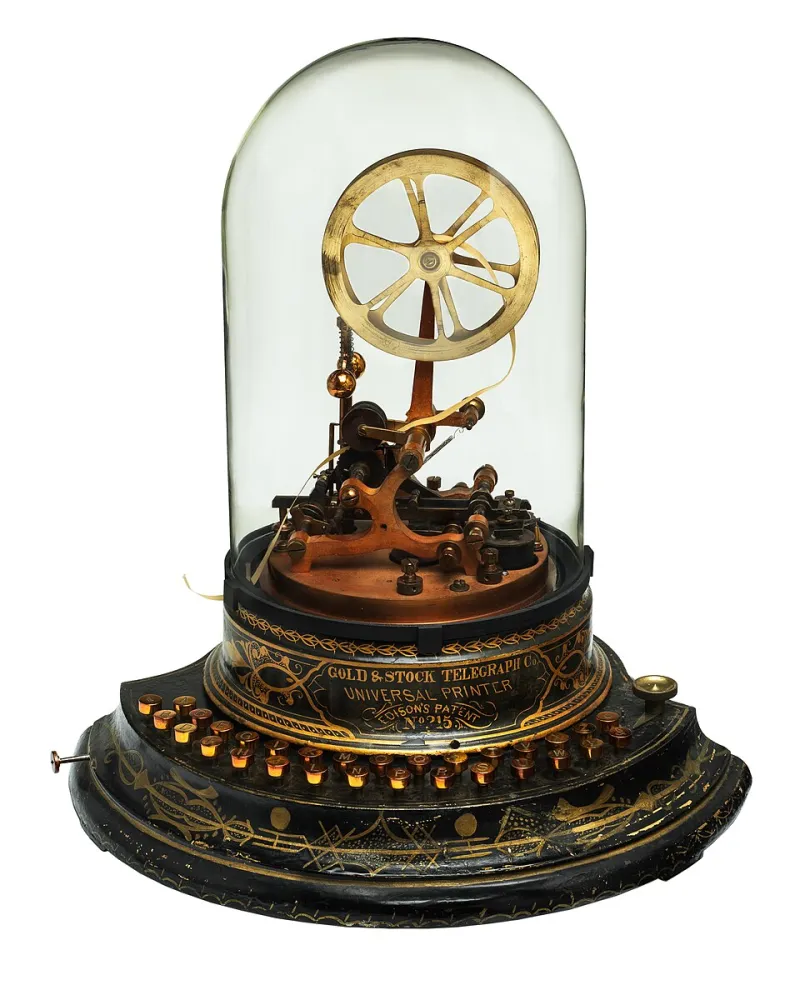
Photo: Jaclyn Nash (photographer), Public domain, via Wikimedia Commons
Somewhere in the early history of computerized stock trading, there is a window of approximately six hours during which a man who cleaned office floors for a living was, on paper, one of the wealthiest people in the United States. He didn't know it. The market didn't know it. And by the time anyone figured it out, the damage — financial, legal, and deeply philosophical — had already been done.
This is a story about what happens when the machines move faster than the humans watching them. It is also, improbably, a story about a janitor.
The Small Investment and the Very Large Mistake
In the early days of electronic brokerage platforms, the infrastructure was new, the safeguards were thin, and the people entering data were doing their best with systems that had not yet been stress-tested by reality. Account numbers were long. Dollar figures were longer. And the difference between a period and a comma, or between one field and the next, could mean the difference between a $1,400 account balance and something that looked like the GDP of a small country.
The maintenance worker — let's call him by the role he played in this story, because his actual name was never part of the public record — had opened a small brokerage account sometime in the preceding months. This was not unusual. The 1980s and early 1990s were the era of the small retail investor, when brokerage firms were actively courting ordinary Americans with the promise that the stock market wasn't just for the wealthy. He had put in a few hundred dollars. Maybe a bit more. A modest stake, by any measure.
Somewhere in the process of migrating account records to a new electronic system, a data entry operator made a mistake. The exact nature of the error has been described in different ways by different sources, but the core of it was this: a decimal point landed in the wrong place, or a field value was copied from the wrong column, and the maintenance worker's account balance was suddenly recorded as a number that began with a nine and had eight more digits after it.
Nine figures. Hundreds of millions of dollars. In the account of a man who owned a mop.
The Machines Got to Work
Here is where the story stops being merely funny and starts being genuinely alarming.
The automated trading systems of the early electronic era were designed to act on account data, not to question it. When a large-balance account sat idle, certain programs were configured to optimize it — moving funds into higher-yield instruments, executing trades based on pre-set parameters, doing the kinds of things that wealth management systems do when they detect a large pile of money sitting around doing nothing.
The system didn't call anyone. It didn't flag the balance for human review. It saw a number, recognized it as large, and began executing trades on the account's behalf.
Over the course of the morning, real transactions were made. Real shares changed hands. Real market activity was generated by an account that had no business generating any of it. The trades were small relative to the fictional balance — the system wasn't trying to move hundreds of millions of dollars at once — but they were real. They settled into the electronic record. They affected prices, in tiny ways, in real markets.
Six Hours of Accidental Wealth
The error was discovered mid-morning when a compliance officer running a routine audit noticed an account balance that didn't match any client profile on record. The investigation that followed was fast and frantic. Within an hour, the source of the error was identified. Within two, the account had been frozen. Within six hours of the original mistake, the balance had been corrected and the maintenance worker's account was back to reflecting the modest reality of his actual investment.
He had, in the interim, been worth more than some of the most recognizable companies in America. He had also, without his knowledge or consent, participated in the stock market in ways that real investors had not.
The Legal Question That Nobody Had an Answer For
The trades were the problem. Not the balance — that was clearly an error, and correcting it was straightforward. But the trades the automated system had executed were a different matter entirely.
Were they valid? The account that authorized them had contained a fraudulent balance — not fraudulent in the sense of intentional deception, but fraudulent in the sense that the funds backing the trades did not actually exist. Contracts had been entered into. Shares had moved. Counterparties had acted in good faith on the other side of those transactions.
The legal framework for unwinding electronic trades was still being written in real time during this period. The brokerage's lawyers spent weeks working through the question of which trades could be reversed, which had to be honored, and who bore the cost of the difference. The maintenance worker himself was eventually contacted — a phone call that must rank among the more surreal moments in the history of personal finance — and informed that he had briefly been extraordinarily wealthy, that he was not anymore, and that he owed nothing and was owed nothing, because the whole thing had been the firm's mistake start to finish.
He reportedly took the news calmly.
A Preview of Fragility
The incident was an early warning sign of something the financial industry would spend the next three decades grappling with: the gap between how fast automated systems can act and how fast humans can catch their mistakes. The janitor's accidental fortune was resolved in hours. Later errors of a similar kind — fat-finger trades, algorithmic cascades, flash crashes — would take billions of dollars with them before anyone could hit a stop button.
The machines were always going to move faster than the people watching them. This was just one of the first times anyone found out what that actually meant.