The Physics Lesson That Killed 226 Soldiers and Changed How Every Army Marches
When Perfect Discipline Became Perfect Disaster
On April 16, 1850, a battalion of French soldiers approached the suspension bridge over the Maine River in Angers, France. They were returning from military exercises, marching in the crisp, synchronized formation that was the pride of Napoleon III's army. Their boots struck the pavement in perfect unison, creating the rhythmic precision that distinguished professional soldiers from civilian rabble.
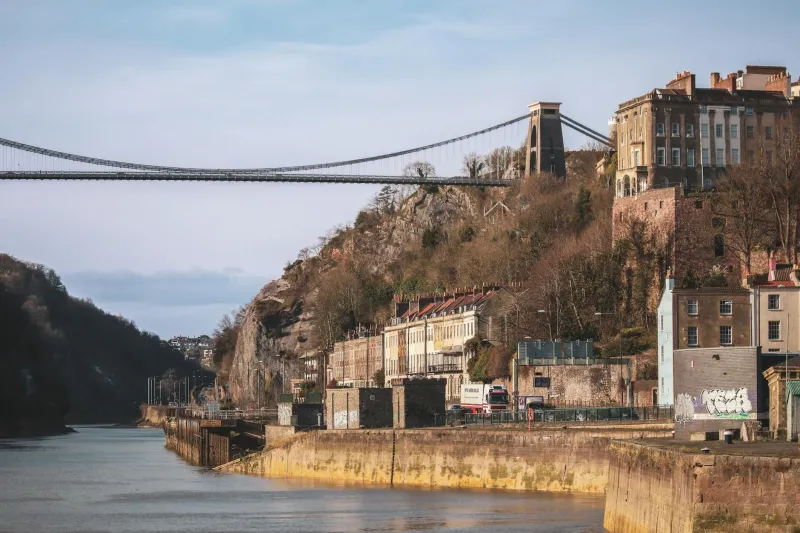
 Photo: Maine River, via cdn.britannica.com
Within minutes, that same precision would kill 226 men and teach the world a physics lesson written in blood.
The Basse-Chaîne Bridge was a marvel of 19th-century engineering, a graceful suspension bridge that had carried traffic across the Maine River since 1839. At 102 meters long, it was designed to handle the weight of horse-drawn carriages, pedestrians, and even military formations. The structure had passed every safety inspection and weathered eleven years of regular use without incident.
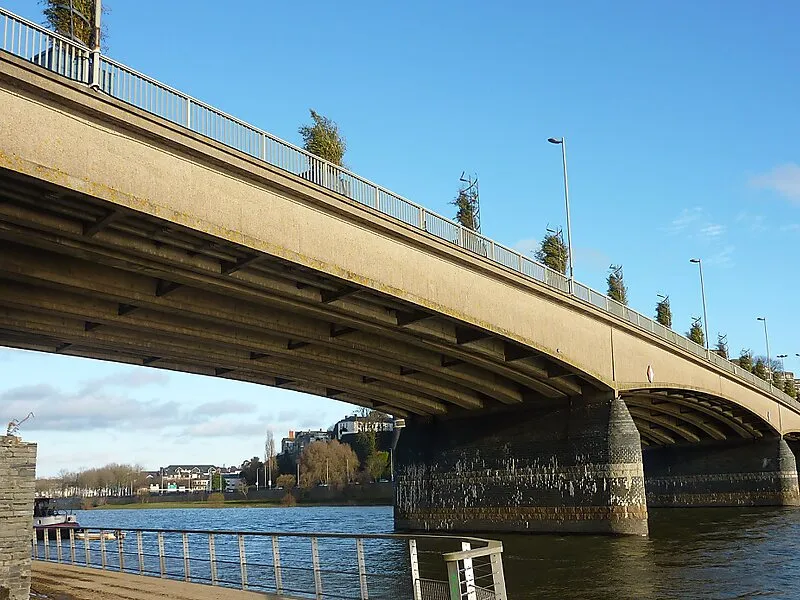 Photo: Basse-Chaîne Bridge, via media-cdn.sygictraveldata.com
What the bridge couldn't handle was 487 soldiers marching in perfect step.
The Invisible Force That Destroys Bridges
As the battalion reached the center of the bridge, their synchronized footsteps began creating something engineers now call resonant frequency. Every structure has a natural frequency at which it wants to vibrate, like a guitar string tuned to a specific note. When external forces match that frequency, even small vibrations can build into catastrophic oscillations.
The soldiers' marching rhythm happened to match the bridge's natural frequency almost exactly. With each synchronized step, the entire structure began to sway more violently. The bridge started moving like a massive tuning fork, amplifying the vibrations with each passing moment.
Eyewitnesses described the bridge beginning to "dance" beneath the soldiers' feet. The stone towers remained steady, but the suspended roadway began undulating like a ribbon in the wind. Some soldiers noticed the strange movement and tried to break formation, but military discipline kept most of the battalion marching in step.
The Moment Everything Went Wrong
The resonance reached a critical point just as the main body of troops crossed the bridge's center span. The suspension cables snapped under the oscillating stress, and a 60-meter section of roadway collapsed into the Maine River below.
226 soldiers plunged into the water along with the bridge debris. Most were wearing full military gear, including heavy packs and equipment that made swimming nearly impossible. The river was running high from spring rains, and the current swept many victims downstream before rescue efforts could reach them.
Local civilians rushed to help, pulling survivors from the water and searching for bodies along the riverbank. But the death toll was devastating: 226 soldiers dead, with dozens more seriously injured. It remains one of the deadliest bridge collapses in European history.
The Investigation That Changed Military Protocol
French authorities immediately launched an investigation into the disaster. Initial theories blamed faulty construction, overloading, or structural defects in the bridge design. But engineering analysis revealed something far more unsettling: the bridge had been destroyed by physics, not poor craftsmanship.
The investigation concluded that synchronized marching had created resonant vibrations powerful enough to tear apart a properly constructed bridge. The discovery was both fascinating and terrifying — it meant that disciplined soldiers could accidentally destroy infrastructure simply by walking across it in formation.
The French military responded by immediately changing marching protocols. Troops were ordered to break step when crossing any bridge or elevated structure. The new regulation wasn't just a precautionary measure; it was an acknowledgment that military precision could become a deadly weapon against the army itself.
Why Armies Still Break Step Today
The lesson learned at Angers spread rapidly through military organizations worldwide. Within decades, every modern army had adopted protocols requiring soldiers to break formation when crossing bridges. The practice became so standard that most soldiers today learn it during basic training without ever hearing the full story behind the rule.
But the Angers disaster wasn't just a military lesson — it was a wake-up call for engineers. The collapse demonstrated that resonance could turn normal activities into structural threats. Bridge designers began incorporating features to prevent resonant oscillations, and military engineers developed new protocols for moving large formations across infrastructure.
The Physics That Still Threatens Modern Structures
Resonant frequency remains a genuine concern for modern engineers. The famous footage of the Tacoma Narrows Bridge collapse in 1940 shows resonance in action — wind created oscillations that built into catastrophic vibrations, ultimately tearing the bridge apart.
 Photo: Tacoma Narrows Bridge, via tf13.org
More recently, London's Millennium Bridge experienced dangerous swaying when it opened in 2000. Thousands of pedestrians naturally began walking in step to compensate for the bridge's movement, inadvertently creating the same resonant effect that destroyed the bridge at Angers. The structure had to be closed and retrofitted with dampers to prevent pedestrian-induced oscillations.
Even modern skyscrapers can experience resonance problems. Strong winds can set tall buildings vibrating at their natural frequency, creating uncomfortable swaying that requires engineering solutions to control.
The Coincidence That Created a Catastrophe
The Angers disaster represents one of history's deadliest coincidences: a bridge with a natural frequency that perfectly matched the marching rhythm of French infantry. If the soldiers had walked slightly faster or slower, if the bridge had been designed with different proportions, if the battalion had broken formation even briefly, 226 men might have lived.
Instead, the laws of physics converged with military discipline to create a tragedy that changed how armies move forever. The precision that made these soldiers effective fighters became the force that killed them.
The Memorial That Remembers a Physics Lesson
Today, a memorial in Angers commemorates the soldiers who died in the bridge collapse. But their legacy extends far beyond the monument. Every time military units break step before crossing a bridge, every time engineers design structures to resist resonant oscillations, every time physics students learn about destructive interference, the disaster at Angers continues to save lives.
The bridge that replaced the collapsed structure still carries traffic across the Maine River. Modern engineering has made it far more resistant to resonant vibrations, but military units still break step when crossing — a reminder that sometimes the most dangerous enemy is the one you create yourself.
The 226 soldiers who died at Angers taught the world that perfect discipline could be perfectly deadly, and that lesson has echoed through military protocol ever since. Their synchronized final march became the reason no army will ever march in step across a bridge again.
Physics, it turns out, doesn't care about military tradition. But military tradition, thankfully, learned to care about physics.