The Arctic Town Where Dying Is Actually Against the Law
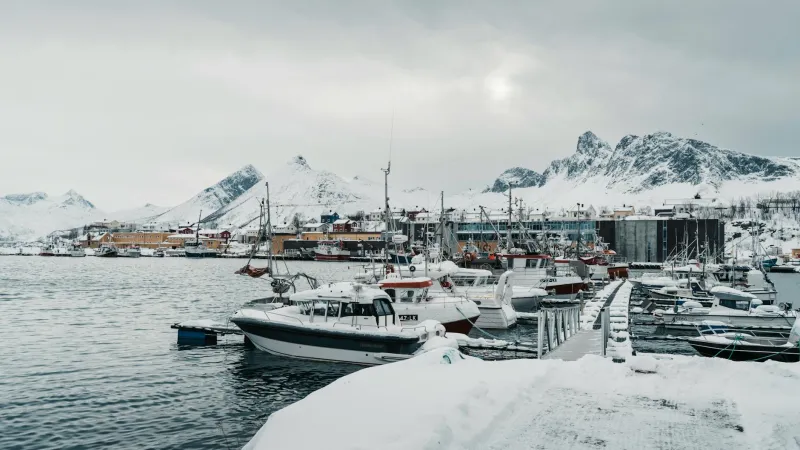
Welcome to the Town Where Death Takes a Detour
Imagine living in a place so remote, so extreme, that even death has to follow special rules. Welcome to Longyearbyen, Norway — population 2,100 — where dying within city limits has been against the law since 1950.
This isn't some quirky tourist gimmick or philosophical statement about the meaning of life. It's a genuine legal prohibition born from a very real problem: in the Arctic permafrost of Svalbard, dead bodies simply won't decompose.
When the Ground Won't Give
Longyearbyen sits at 78 degrees north latitude, roughly 800 miles from the North Pole. At this latitude, the sun doesn't set for four months in summer and doesn't rise for four months in winter. Temperatures regularly drop to -40°F, and the ground is permanently frozen to depths of over 1,500 feet.
This extreme environment creates what locals call "nature's freezer." Bodies buried in Longyearbyen's small cemetery in the 1930s were discovered decades later in perfect preservation — still carrying active bacteria and viruses from their time of death.
In 1950, scientists examining the old graves made a chilling discovery: they found perfectly preserved tissue samples containing live influenza virus from the 1918 Spanish flu pandemic. The permafrost had essentially created a biological time capsule, preserving deadly pathogens that could theoretically still cause infection.
The Norwegian government's response was swift and absolute: no more burials in Longyearbyen. Ever.
The Logistics of Legislated Mortality
So what happens when someone in Longyearbyen gets seriously ill or reaches the end of their life? They get what locals grimly call "the last flight south."
Anyone diagnosed with a terminal illness or showing signs of imminent death must leave Svalbard and travel to mainland Norway. The nearest hospital capable of handling end-of-life care is in Tromsø, over 500 miles away. There's no choice in the matter — it's not just social pressure or medical advice. It's the law.
The town maintains a small medical clinic, but it's equipped only for basic care and emergencies. Serious medical situations require immediate evacuation to the mainland. The local joke, delivered with characteristic Norwegian understatement, is that Longyearbyen has "excellent emergency response times — as long as the weather cooperates."
Life Under the Death Ban
Living with a legal prohibition on dying creates some genuinely surreal situations. Pregnant women must leave Svalbard several weeks before their due date because the medical facilities can't handle complicated births — and because newborns, like everyone else, aren't allowed to die there.
Elderly residents face a particularly difficult reality. Many have lived in Longyearbyen for decades, working in the coal mines or research stations that form the backbone of the local economy. But as they age, they're forced to confront the fact that they can't actually spend their final years in the place they call home.
The town has developed an informal support network to help residents navigate this strange reality. Neighbors look out for signs that someone might need "the talk" about planning their departure. Local authorities maintain relationships with mainland facilities to ensure smooth transitions.
The Practical Problems of Permafrost
The death ban isn't just about preserving historical pathogens — though that's certainly part of it. The permafrost creates practical problems that most places never have to consider.
Traditional burial is impossible because you can't dig graves in permanently frozen ground. Cremation requires facilities that Longyearbyen doesn't have and can't practically build. Even temporary storage of bodies becomes problematic when your natural environment is essentially a giant freezer that preserves everything indefinitely.
The town's existing cemetery, established in the early 1900s, serves as a stark reminder of these challenges. The handful of graves there are slowly migrating upward as the permafrost shifts, and the headstones sit at odd angles as the frozen ground moves beneath them.
Global Warming's Unexpected Complications
Climate change has added new wrinkles to Longyearbyen's death ban. As Arctic temperatures rise and permafrost begins to thaw in some areas, the town faces the possibility that its old cemetery might actually start decomposing — potentially releasing not just the Spanish flu virus, but whatever other pathogens have been preserved there for decades.
Scientists now regularly monitor the cemetery for signs of thawing, and there's ongoing discussion about whether the preserved remains should be exhumed and moved to mainland Norway as a precautionary measure.
The Philosophy of Forbidden Death
The death ban has created an unusual psychological environment in Longyearbyen. Residents often describe a heightened awareness of mortality, knowing that their time in this extraordinary place has built-in limitations. Some find it liberating — it forces them to live more intentionally. Others find it unsettling, like living under a constant reminder of their own mortality.
Local businesses have adapted to the reality in unexpected ways. The town's travel agent specializes in "medical evacuations," and there's a cottage industry around helping elderly residents relocate to mainland Norway while maintaining connections to their Svalbard community.
A Town Shaped by Extremes
Longyearbyen's death ban is perhaps the most unusual example of how extreme environments force human societies to develop genuinely unprecedented rules. It's a place where the basic assumption that you can live and die in the same location simply doesn't apply.
The town operates under numerous other unusual restrictions — residents must remove their shoes when entering most buildings (to preserve heat), can't own cats (they might hunt protected Arctic birds), and must carry rifles when leaving the settlement (polar bear protection). But the death ban remains the most psychologically striking.
Living at the Edge of the Possible
Today, Longyearbyen continues to grow as a research hub and tourist destination, despite — or perhaps because of — its unusual restrictions. The death ban has become part of the town's identity, a reminder that some places on Earth are so extreme that even our most basic human experiences must be reimagined.
For the residents of this Arctic outpost, the prohibition on dying locally isn't a morbid curiosity — it's simply another adaptation to life at the edge of the habitable world. In a place where the sun doesn't set for months and polar bears outnumber people, having to leave town to die probably seems like just another Tuesday in the world's most unusual municipality.